RASC Calgary Centre - Mercury Transit 2019 A Free Public Event:
| |||||||||||||||||||||||
 Page last updated November 7, 2019
| Warning! Observing the sun can permanently damage your eyes, therefore extreme caution and only specialized solar observing equipment should ever be used! |
Members of the public are invited to view this astronomical event
early on November 11 at either: Ralph Klein Park or Nose Hill Park.
| Date: | November 11, 2019 (Remembrance Day) |
Time: | From Sunrise 07:46 AM to 11:04 AM  A moment of silence will be observed at 11:11 AM to remember those that perished in wars protecting our country and our freedom. |
| Note: | Weather permitting. A clear sky is needed to see this event. If it is totally clouded over or snowing the transit will not be visible. |
| Admission: | Free. (Donations graciously accepted) |
| Parking: | Free. |
| Note: | Dress warmly - it is liable to be a cold winter morning, and No food or drinks will be provided at this RASC event. |
| Note: | Do not bring your own binoculars or telescope! Only very specially filtered telescopes can be used to safely observe the Sun. Using unfiltered binoculars or a telescope can instantly blind you! |
|
| ||||||
Mercury will appear as a very tiny black dot following the path across the Sun's face as shown in the diagram above. However, the planet is so small that a specially equipped telescope is needed to see it.
Although a transit is widely visible, one still has to be situated on the portion of the earth that is daylight and most likely to have clear skies.
To observe this event, the Calgary Centre of the Royal Astronomical Society of Canada (RASC) will be hosting two early morning observing sessions. These locations were chosen as they have an excellent opportunity to observe the Sun as it will be low in the south east at sunrise and in the south when the transit ends.
Members of the Royal Astronomical Society of Canada, Calgary Centre are well trained in safe solar viewing methods and will be there with specially equipped telescopes to safely observe the Sun and the Transit.
Map to Ralph Klein Park

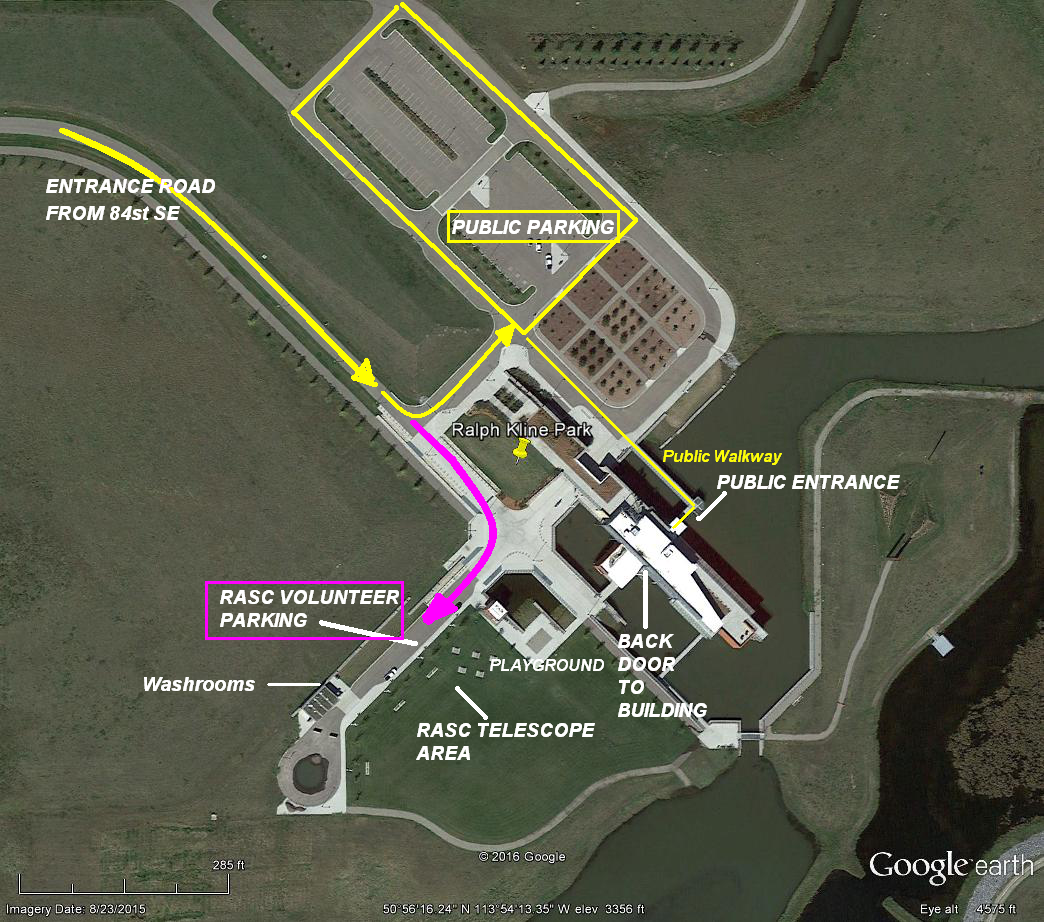
Ralph Klein Park Parking Areas
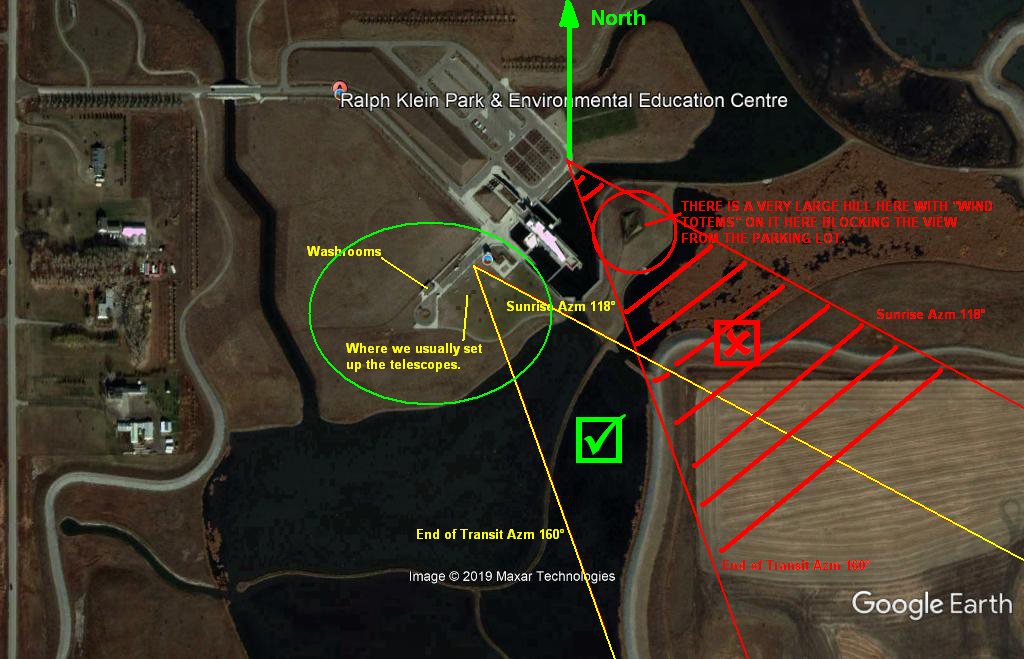
Ralph Klein Park Telescope setup area
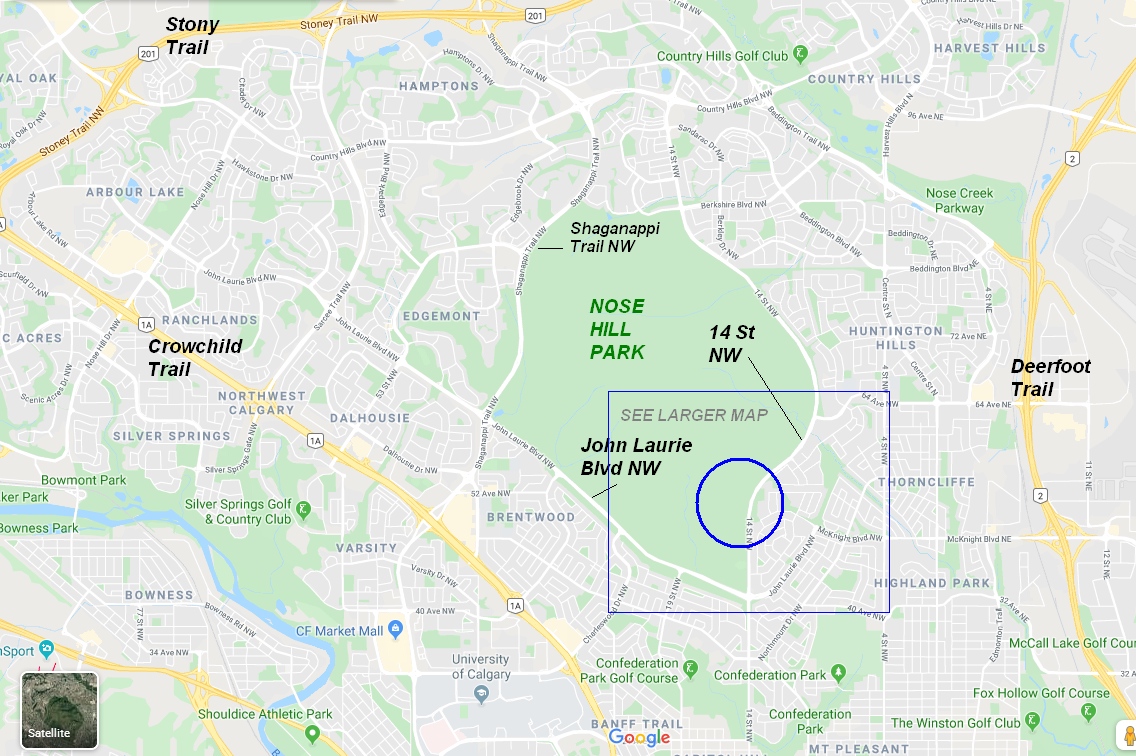
Map to Nose Hill Park
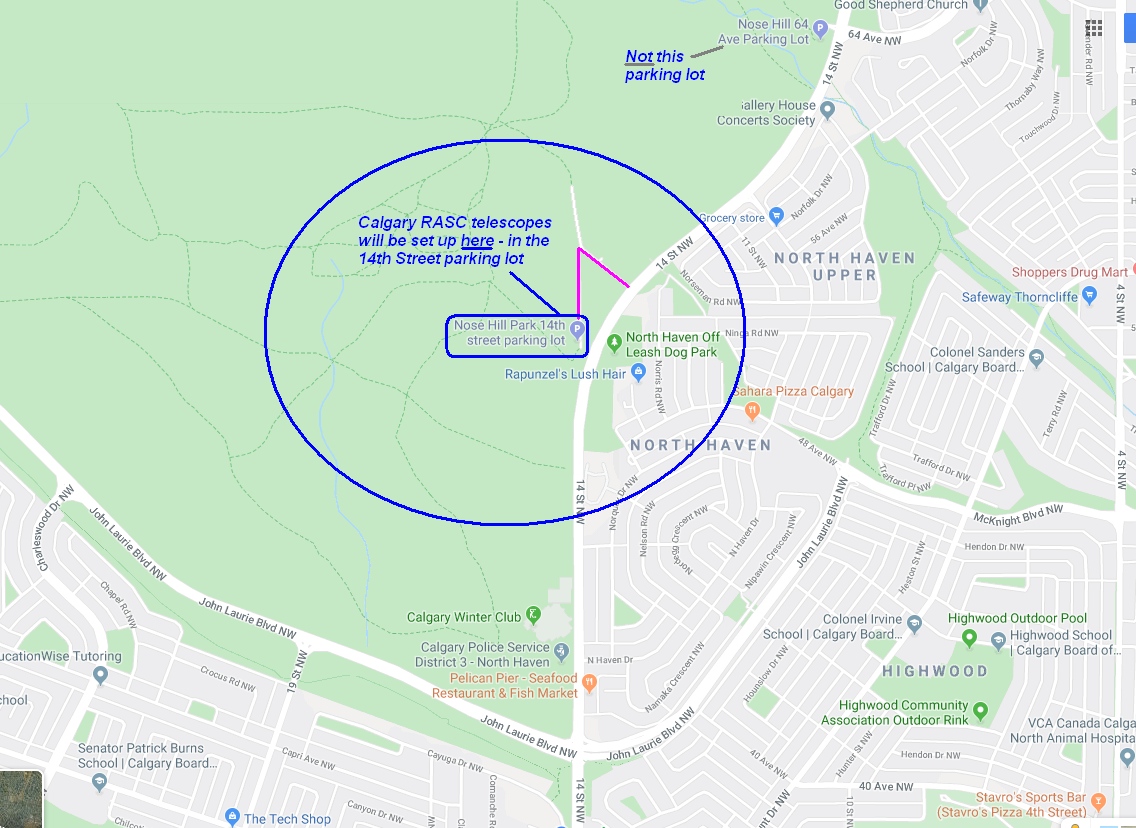
Nose Hill Park Telescope setup area
Additional Information about Transits of Mercury
If you would like to learn more about this transit, go to Fred Espenak's web page:
http://www.eclipsewise.com/oh/tm2019.html
For the article and photos from the Mercury Transit on 2006 Nov 8 Click Here
For images of Transits of Mercury see:
- APOD: 2004 June 6 - Mercury Spotting
- APOD: 2003 May 27 - A Mercury Transit Sequence
- EPOD from 05-14-2003
- APOD: 2003 May 13 - Mercury Transits the Sun
- APOD: 2003 May 8 - Mercury Spotting
- APOD: December 10, 1999 - Spot The Planet
- APOD: November 19, 1999 - Mercury And The Sun
- APOD: November 6, 1999 - X ray Transit of Mercury
- APOD: July 2, 1998 - X-ray Transit of Mercury
- EPOD from Nov 2006
- APOD: ISS and Mercury Too
- APOD: December 17, 1996 - Mariner's Mercury
- APOD: 2004 September 12 - Mercury: A Cratered Inferno
- APOD: 2003 February 16 - Southwest Mercury
- APOD: 2002 July 16 - Outbound from Mercury
- APOD: 2001 November 24 - Mariner's Mercury
- APOD: 2001 August 19 - Mercury: A Cratered Inferno
- APOD: 2000 December 16 - Degas Ray Crater on Mercury
- APOD: 2000 February 13 - Southwest Mercury
- APOD: January 2, 1999 - Mercury: A Cratered Inferno
- APOD: September 6, 1998 - Mariner's Mercury
- APOD: November 30, 1997 - Mercury: A Cratered Inferno
- APOD: January 12, 1997 - Mercury in Stereo: Craters Within Craters
- APOD: December 17, 1996 - Mariner's Mercury
- APOD: December 8, 1996 - Degas Ray Crater on Mercury
- APOD: September 13, 1996 - Southwest Mercury
- APOD: September 12, 1996 - Mercury: A Cratered Inferno
- APOD: January 21, 1996 - Mercury's Faults
- APOD: January 20, 1996 - Mercury's Caloris Basin
- APOD: August 14, 1995 - Mercury: Closest Planet to the Sun
Seven Century Catalog of Mercury Transits: https://eclipse.gsfc.nasa.gov/transit/catalog/MercuryCatalog.html
1601 CE to 2300 CE - 94 Transits
31 in May (33%) - Descending Node
Sun=1902", Mercury=12" - Size ratio: M/S= 1/158
63 in November (67%) - Ascending Node
Sun=1937", Mercury=10" - Size ratio: M/S= 1/194