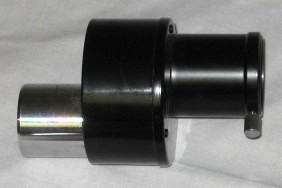
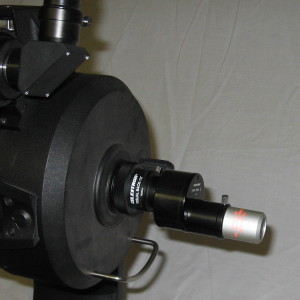
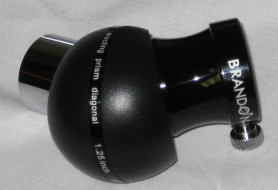
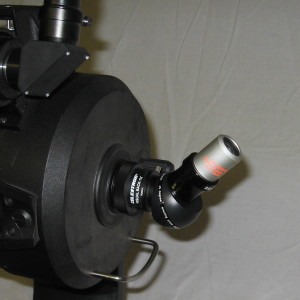
The images and comments below are relative to a Schmidt-Cassegrain telescope (as shown)
or a refracting telescope (not shown). Many of these configurations are not possible
on a Newtonian or Dobsonian telescope because the focuser will not travel far enough
to bring objects to a focus.
|
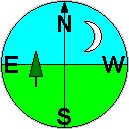
True upright image - i.e. a binocular view
|
| |
Configuration |
Image |
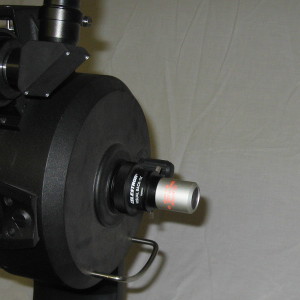 |
The eyepiece is placed directly into the telescope.
This makes it difficult to look through the eyepiece when the telescope is pointing to objects higher up in the sky - the eyepiece is low down and you half to get down and look upwards to see through the scope. |
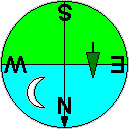
The up-down direction is inverted, and the left-right direction is reversed. |
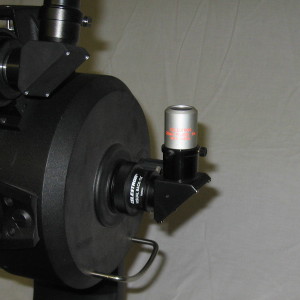 |
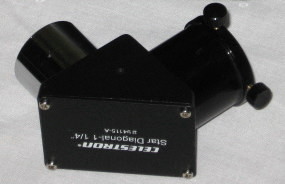
The Star Diagonal is placed into the telescope and the eyepiece is placed vertically into the diagonal.
This is a much more comfortable viewing position for astronomical objects, but if the telescope is mounted on a fairly tall tripod, you have to be tall or get on a step stool to look down into the eyepiece for objects near the horizon. |
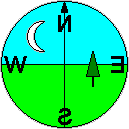
The up-down direction is restored, but the left-right direction is still reversed (as viewed from the back of the telescope). |
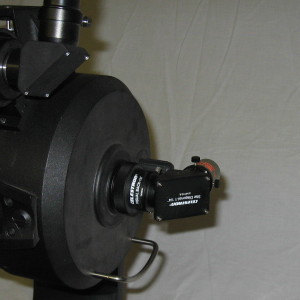 |
As above, but the Star Diagonal has been rotated 90° to the right.
This is a common position for viewing objects near the horizon when the scope is mounted on a fairly tall tripod, or if children need to be able to look through the scope. |
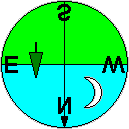
The left-right direction is restored, but the up-down direction is still inverted (as viewed from the right side of the telescope). |
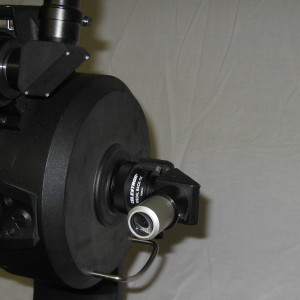 |
As above, but the Star Diagonal has been rotated 90° to the left. |
The left-right direction is restored, but the up-down direction is still inverted.
(Yes - it's the same as the one above, regardless of whether the eyepiece is on the right or left) |
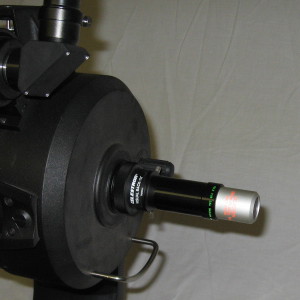 |
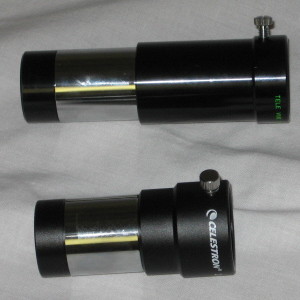
The Barlow lens is placed into the telescope and the eyepiece is placed directly into the Barlow.
This makes it difficult to look through the eyepiece when the telescope is pointing to objects higher up in the sky - the eyepiece is very low down and you half to get down and look upwards to see through the scope. |
Same as for an eyepiece without a Barlow |
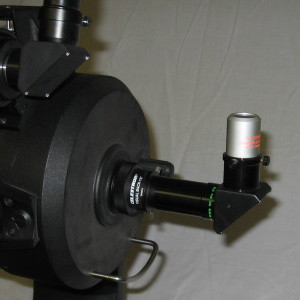 |
A Barlow, then a Star Diagonal, then the eyepiece. |
Same as for a Star Diagonal without the Barlow. |
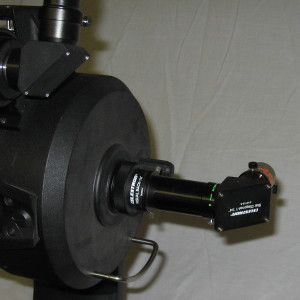 |
A Barlow, then a Star Diagonal, then the eyepiece.
The Star Diagonal has been rotated 90° to the right.
|
Same as for a Star Diagonal 90° right without the Barlow. |
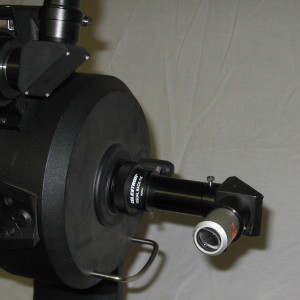 |
A Barlow, then a Star Diagonal, then the eyepiece.
The Star Diagonal has been rotated 90° to the left.
|
Same as for a Star Diagonal 90° left without the Barlow. |
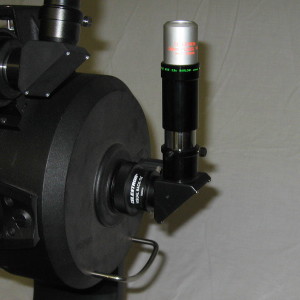 |
A Star Diagonal, then a Barlow, then the eyepiece.
Note:
Often the Barlow does not "fit" in this configuration, i.e. its barrel will not fit entirely into the diagonal.
You also have to be really tall to be able to look down into the eyepiece in this configuration.
Therefore this configuration is not recommended. |
Same as for a Star Diagonal without the Barlow. |
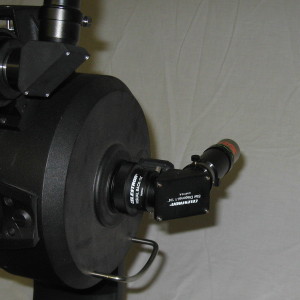 |
A Star Diagonal, then a Barlow, then the eyepiece.
The Star Diagonal has been rotated 90° to the right.
Note:
Often the Barlow does not "fit" in this configuration, i.e. its barrel will not fit entirely into the diagonal.
This configuration is not recommended since the weight of the Barlow and the eyepiece puts a lot of torque on the Star Diagonal. |
Same as for a Star Diagonal 90° right without the Barlow. |
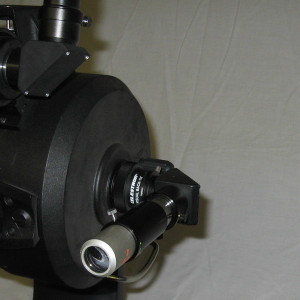 |
A Star Diagonal, then a Barlow, then the eyepiece.
The Star Diagonal has been rotated 90° to the left.
Note:
Often the Barlow does not "fit" in this configuration, i.e. its barrel will not fit entirely into the diagonal.
This configuration is not recommended since the weight of the Barlow and the eyepiece puts a lot of torque on the Star Diagonal. |
Same as for a Star Diagonal 90° left without the Barlow. |
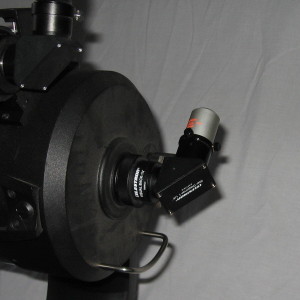 |
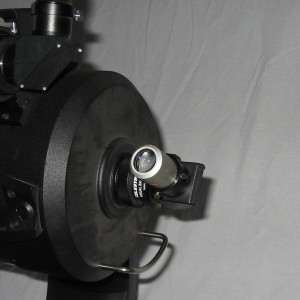
A Star Diagonal, then the eyepiece.
The Star Diagonal has been rotated 45° to the right.
|
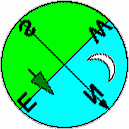
The view looking directly in from the right side.
|
 |
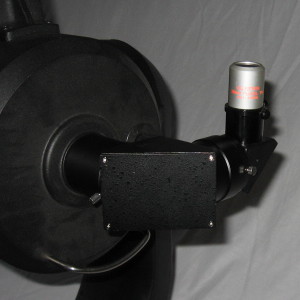
A Star Diagonal, then the eyepiece.
The Star Diagonal has been rotated 45° to the left.
|
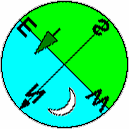
The view looking directly in from the left side.
|
 |
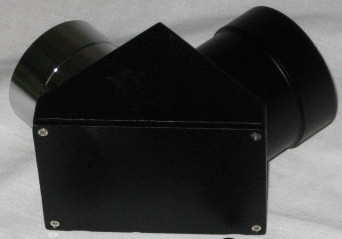
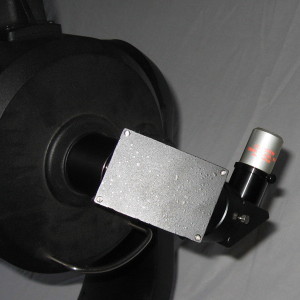
Two Star Diagonals.
Can you use two Star Diagonals to make the image "correct"? - Yes.
The first Star Diagonal restores the left-right direction, sending the image to the right side (so you have to stand at the right side of the scope to see it correctly).
The 2nd Star Diagonal restores the up-down direction, sending the image upwards (so you have to look down into the eyepiece).
Requires significant focuser travel and increases the focal length of the SCT by the combination of the light path length of both diagonals.
|
Correct - the view from the right side of the scope facing the assembly and looking down into the eyepiece.
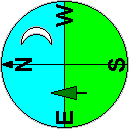
Incorrect - the view from the back of the telescope looking down into the eyepiece. |
 |
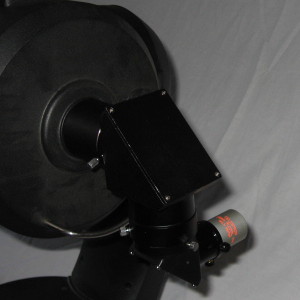
Two Star Diagonals.
As above but rotated 45° downwards.
|
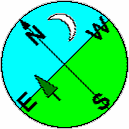
The view from the right side of the scope facing the assembly and looking down into the eyepiece.
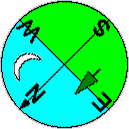
The view from the back of the telescope looking down into the eyepiece. |
 |
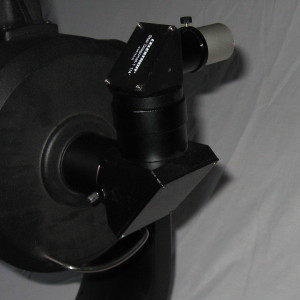
Two Star Diagonals.
As above but rotated 90° downwards.
|
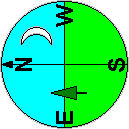
The view from the right side of the scope facing the assembly and looking into the eyepiece. |
 |
Two Star Diagonals.
An alternate configuration with the eyepiece at the "top" of the assembly.
|
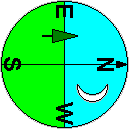
The view from the right side of the scope facing the assembly and looking into the eyepiece. |