RASC Calgary Centre - Weigh Sun
Weigh Sun
by Jason Nishyama
Page last updated November 5, 2018
Weigh the Sun
In the summer months and a lack of dark sky, a simple observational project which
can be done in a few minutes without leaving your house is to weigh the Sun. All you need is a
calculator and a bathroom scale!
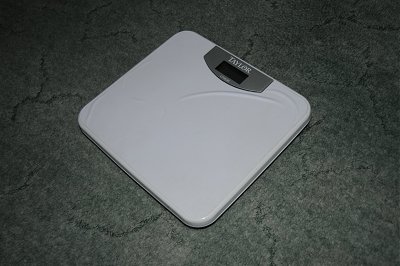
So first things first, you need to weigh yourself. Now you need to find your weight and not your
mass which means you need to work out the force that the Earth's gravity is pulling down on you
with and not the amount of stuff in you. For this it helps if you, like me, bought an inexpensive
flat bathroom scale (Figure 1) which works by measuring the force gravity exerts on you and not an
expensive balance type scale which actually computes your mass by sliding a small mass along a
bar. You will need to set the scale to pounds (which is the imperial unit of force) and not to
kilograms (the SI unit of mass) since the scale actually reports force (which is computed to mass
on Earth by the scale). The irony here is if you have the more expensive balance type scale and it
reports to you in pounds, it's doing the reverse conversion as it actually measures mass and
should report in kilograms (or if you're into imperial units, slugs).
Anyhow, go weigh yourself, in pounds. Once you have done this you have done the only observation
you need to do to weigh the Sun. Now since it's always easier to work in SI (metric) we need to
convert from pounds to the SI unit of force the Newton (named after Sir Issac). This is a simple
enough calculation, just multiply your weight in pounds by 4.448 to get your weight in Newtons
(abbreviated N).
Now we need to get your mass. If you have an expensive balance type scale, at this point go get
your mass by reading the kg scale. If like me you don't have one of these scales you can compute
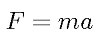
your mass based on the acceleration due to the Earth's gravity and Newton's Second Law of motion
as shown in Equation 1 where F is force in Newtons, a is acceleration in m/s^2 and m is mass in
kg. At this point someone's going to point out that we're now using inertial mass and not
gravitational mass. Don't worry, to the limits of our ability to measure mass, inertial mass is
the same as gravitational mass and for this simple experiment that's good enough. Now the
acceleration due to gravity at the Earth's surface is 9.806 m/s^2 (this is simple to work out, but
I leave that as an exercise for the reader). Solving Equation 1 for mass yields Equation 2. Simply
use your weight in Newtons for F and the acceleration due to the Earth's gravity as a and you'll
get your mass in kg.

Now that we have your weight and mass, we can weigh the Earth. Now you may be asking yourself why
we're weighing the Earth when the title of this article is Weighing the Sun, but we need to know
the Earth's mass before we can compute the Sun's mass so bear with me. To work out the Earth's
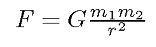
mass we use Newton's law of gravity as given in Equation 3 where F is the gravitational force
between two objects (here you and the Earth), G is the universal gravitational constant
(6.67x10^-11 Nm^2/kg^2) m_1 is the mass of one object (here the Earth), m_2 is the mass of the
second object (here you) and r is the distance from the centre of one object to the centre of the
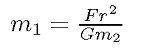
other object (here the radius of the Earth). Solving for m_1 gives us Equation 4 where you can now
put in the known values of your mass (m_2), your weight (as F) the radius of the Earth (which in
metres is 6.37 x10^6 m) and the gravitational constant and volia, the mass of the Earth in
kilograms!
Ok you've now been doing some mathematical heavy lifting so give yourself a break, have a coffee
or tea and some fig newtons because now as an encore you will be calculating the mass of the
Sun.
Now that you have a mass for the Earth it's time to weigh the Sun. To do this we will use Newton's
form of Kepler's third law shown in Equation 5. This is the general form of P^2=a^3 where P is the
period of the planet in years and a is the orbital radius in astronomical units. In Newton's form,
P is still the period of the planet, but now in seconds, a is the orbital radius in metres and the
masses are the masses of the Sun (m_1) and the planet (m_2) in kilograms. G is still the
gravitational constant. Solving Equation 5 for the Sun's mass yields Equation 6 which you can now
put your calculated mass of the Earth, the Earth's distance from the Sun (1.496x10^11 m) and the
time it takes the Earth to orbit the Sun once (365.24219 d x 86400 s/d) in seconds. Punch the
numbers into a handy calculator or computer and you now have the mass of the Sun in kilograms!


So by simply weighing yourself at home, you've been able to determine the masses of both the Earth
and the Sun. Not a bad trick for a single observation from a piece of equipment you probably
didn't even think of as capable of such a feat.
|


